Note: The following article was originally published in the Jerusalem Post here.
After a decade of consolidation, no safeguards remain to prevent Turkey succumbing to dictatorship.
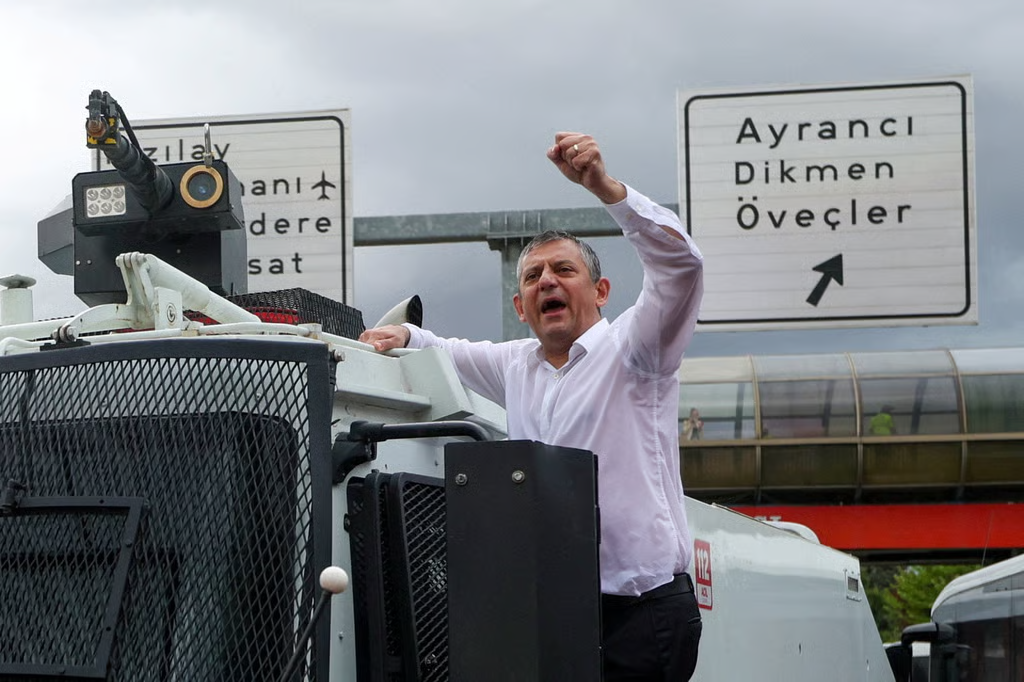
What has long been the reality for marginalized Kurds in the southeast is now becoming the norm for all Turkish citizens. The mass arrests and replacement of elected mayors with trustees appointed by the state that characterized Kurdish living is being replicated in the rest of the country. The ousting of Republican People’s Party (CHP) leader Ozgur Ozel by a court that annulled his election–followed by his eviction from party headquarters by riot police–is only the latest sign of how eroded the independence of state structures has become in Turkey.
Freed from any domestic constraint, Erdogan has turned the same unchecked ambition outward, projecting Turkish military power across Syria, Libya, Iraq, and Somalia in ways that threaten the new regional order being built by Israel and the United States.
The scale of domestic capture is what makes everything else possible.
The crackdown against the CHP did not begin with Ozel. It opened in March 2025 with the arrest of Istanbul mayor Ekrem Imamoglu on charges the party called fabricated. Imamoglu was Erdogan’s strongest challenger at the time, and his jailing sparked the largest protests in over a decade.
The year that followed was marred by authorities jailing more than five hundred CHP officials, sixteen of them mayors, and stripping towns from the party that had beaten his Justice and Development Party (AKP) in the 2024 local elections. The court that removed Ozel in late May went further still, reinstating the predecessor he had defeated and handing the leadership of Turkey’s oldest party to a judge rather than its members.
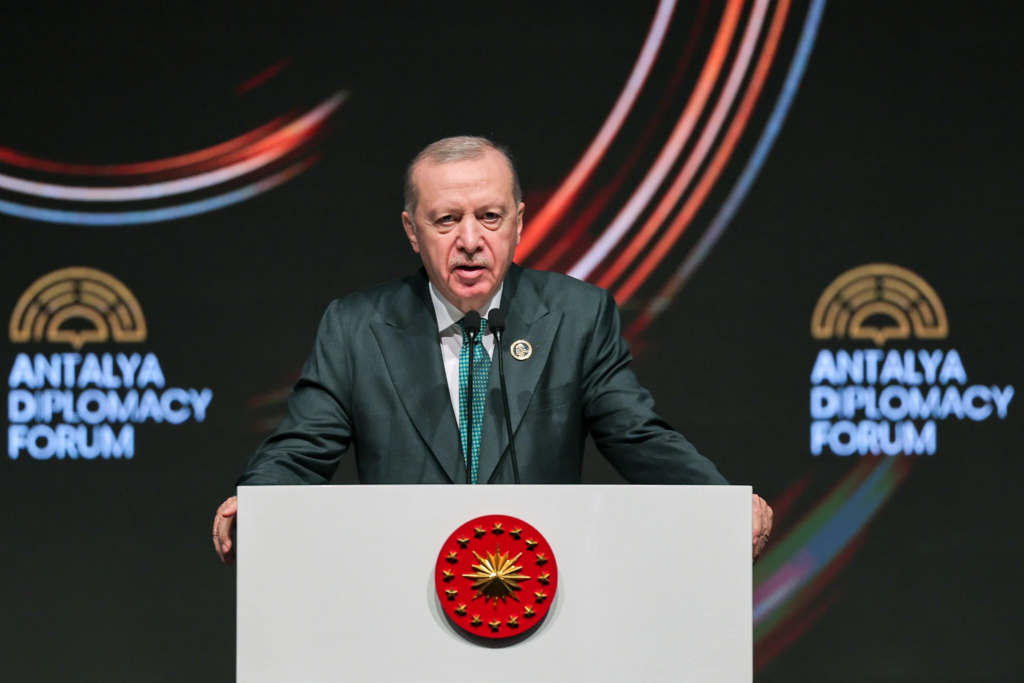
This mirrors the process that Turkish authorities have long imposed in the southeast, where elected People’s Democratic Party (HDP) members since 2015 have been detained and removed from mayoral positions on trumped up charges of terrorism. Most notable of these figures was former HDP leader Selahattin Demirtas who resides in a Turkish prison to this day. Erdogan’s clampdowns on opposition reflect the extent of his willingness to pursue and consolidate power through state violence. As the NATO summit approaches in July of this year, Erdogan is set to deploy over 40, 000 security personnel around Ankara to secure the event. The usage of such personnel within Turkey’s own borders, even for a high-profile event, is likely not just for security purposes but a wider show of force aimed at international observers and domestic opposition alike.
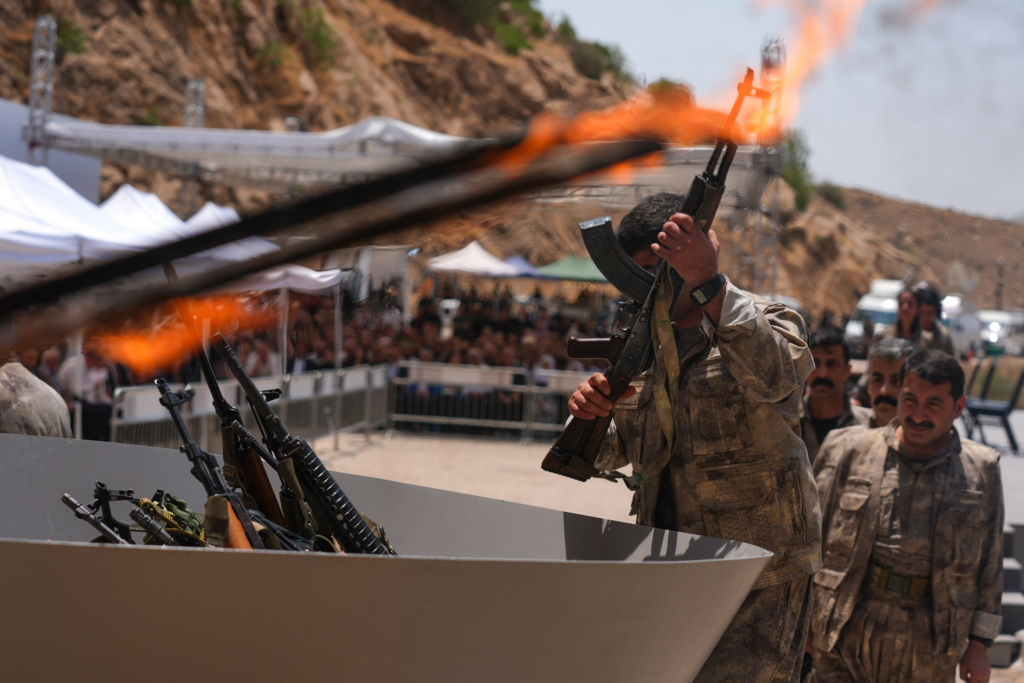
A second political process runs alongside the first and looks like its opposite. Starting in February 2025 the imprisoned Kurdistan Workers’ Party (PKK) founder Abdullah Ocalan called on the movement to lay down its arms and dissolve. Senior PKK cadres came together to honor this pronouncement by burning the first batch of weapons at a ceremony in southern Kurdistan (northern Iraq). The expected legal reforms promised by Erdogan’s government have stalled and the parliamentary commission now ties any concession to verified disarmament, bringing the talks to a standstill.
Erdogan’s interest in this process is not reconciliation but political calculation–he is seventy-two years old and approaching the end of the terms Turkey’s constitution allows him. Altering the constitution to extend term limits past 2028 requires Kurdish votes. The opening to the Kurds is a bargaining chip, advancing when he needs their support and freezing when he does not. Repression and conciliation serve the same end: keeping Erdogan in power.
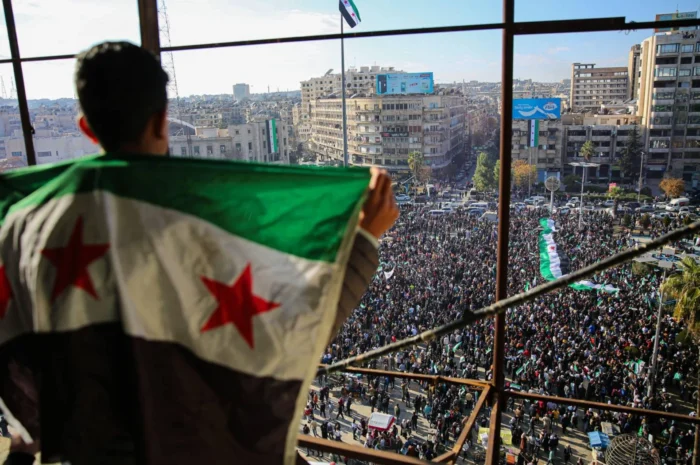
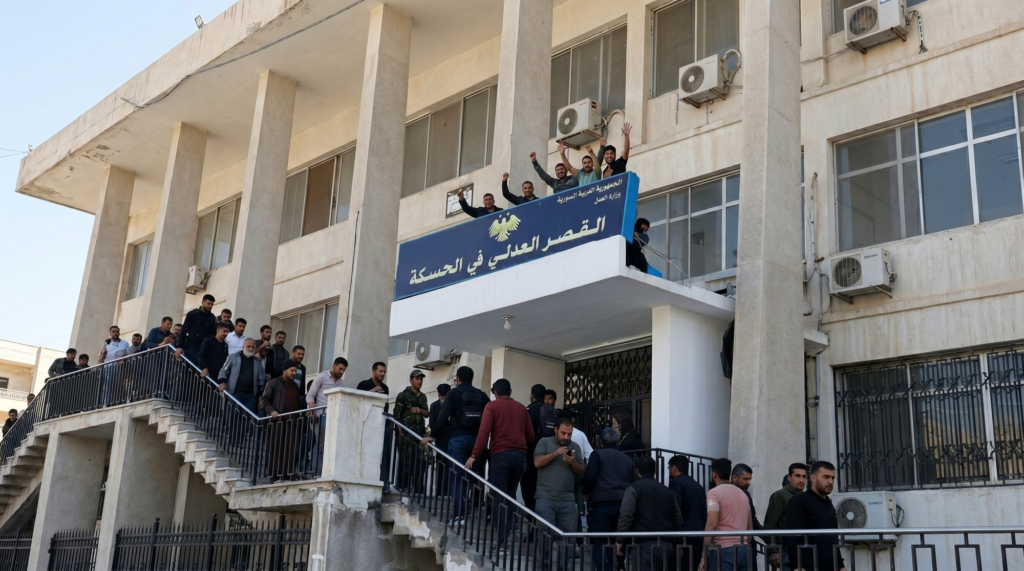
This is the consolidated power Erdogan now projects abroad, and nowhere more forcefully than in Syria. The fall of Assad in 2024 removed Iran as the dominant hand in Damascus and left a vacuum Ankara rushed to fill. Turkey’s years of military and political investment into the opposition helped topple Assad and install an Islamist government that is beholden to Turkish influence. Within months of Assad’s collapse, Turkish intelligence and defense officials were in Damascus to secure an agreement for Turkey to train new Syrian army personnel and supply its weapons. Talks continue over a deepened defense pact that would give Turkey airbases in Palmyra, including the Tiyas (T4) base Israel has bombed.
Ankara has also shaped the policies of the Syrian state, most notably toward the Kurds of northeastern Syria by pressing Damascus to strip away the autonomous status of the Syrian Democratic Forces (SDF). Turkey treated the SDF as a Syrian branch of the PKK and had long sought to dismantle the organization. Another more pressing consequence of Ankara’s encroachment in Syria is the de factor role it plays as protector of interim president Ahmed Al-Sharaa against Israel. Damascus increasingly turns to Ankara for a counterweight against Israeli action in the country.
Syria is only one theatre of a grand strategy.
Ankara’s push into the eastern Mediterranean rests on the doctrine it calls Mavi Vatan (Blue Homeland), anchored in the 2019 maritime accord with Tripoli that drew a Turkish economic zone across waters claimed by Greece and Egypt. This fiction gave Ankara a pretext to contest the routes carrying Israeli and Cypriot gas to Europe, and Turkey is now pursuing a similar deal with Damascus to push that line toward Israel’s own coast.
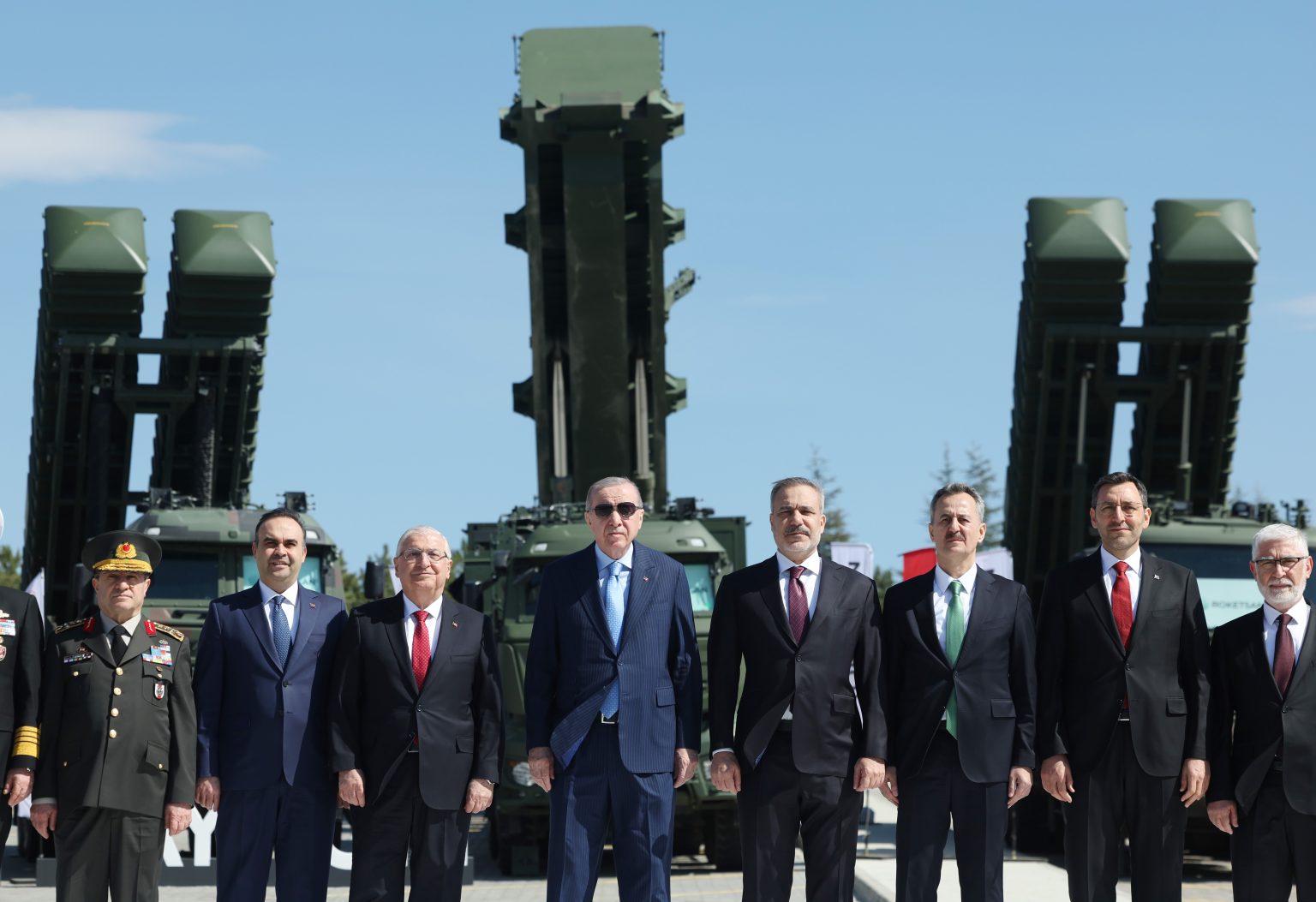
What lends these claims menace is the speed at which Ankara is building the means to enforce them. Late last year it test-fired the hypersonic Tayfun Block IV, and this May it unveiled the Yildirimhan, an intercontinental ballistic missile the state claims will reach six thousand kilometers (3,728 miles). For a NATO member to pursue an ICBM is troubling, and while Turkey has no nuclear warhead on it, the capability would put one within reach should Ankara’s calculations shift.
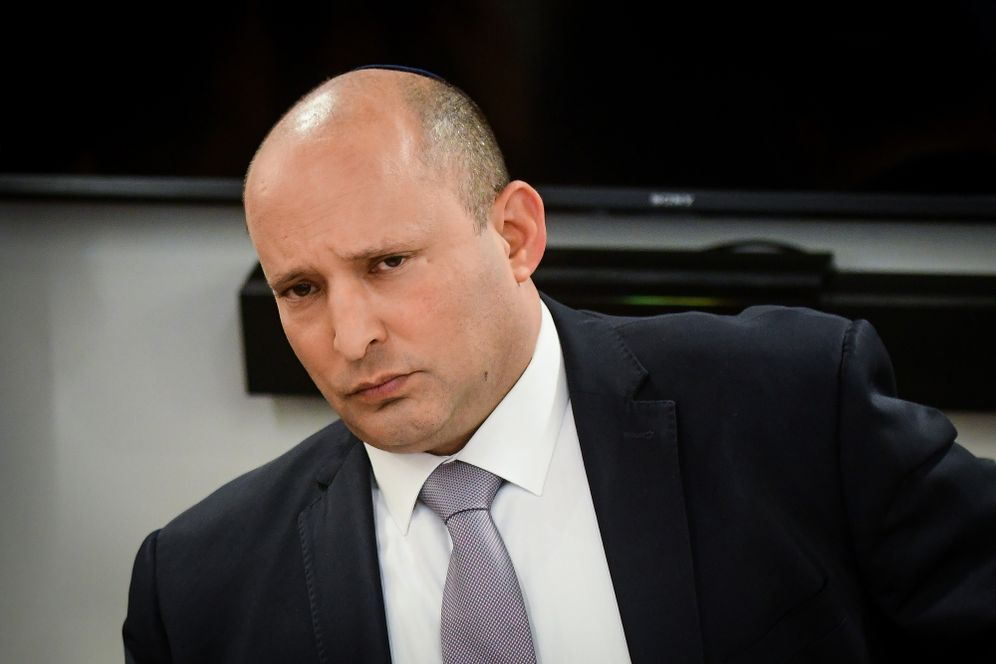
For Israel the conclusion is unavoidable–the foremost challenger to the order Jerusalem and Washington is building is no longer a weakened Iran. It is a NATO member with a modern military and growing force projection that is led by an autocrat who has cited his interventions in Libya and Karabakh as a template for action over Palestine. Erdogan has halted trade with Israel and closed his ports to it. As former Prime Minister Naftali Bennett rightly highlights, Turkey is the new Iran and poses a growing threat to both Israel and the region’s stability.
The clear lesson for Israeli policy is that Turkey can no longer be treated as a difficult ally simply to be managed and appeased but as a strategic competitor in the region.
The contest will be settled less in Gaza, or even Iran, than in Syria and the eastern Mediterranean, where Turkish bases, maritime claims and missile advance at once. The strikes on the Syrian army and the buffer Israel holds in the south are partly a refusal to let Ankara build a forward base on the Golan.
That refusal must mature into a strategy: closer alignment with Greece, Cyprus and Egypt, the denial of Turkish encroachment in Syria, and a recognition that the problem lay in Erdogan himself, to be either contained abroad or removed at home.
A government that has dismantled every check on its leader at home is unlikely to accept one abroad. Ankara will keep redrawing the region’s map as it pleases. Until restraints are rebuilt or the source of the sickness is dealt with for good.
Written by Anthony Avice Du Buisson (06/10/2026)