
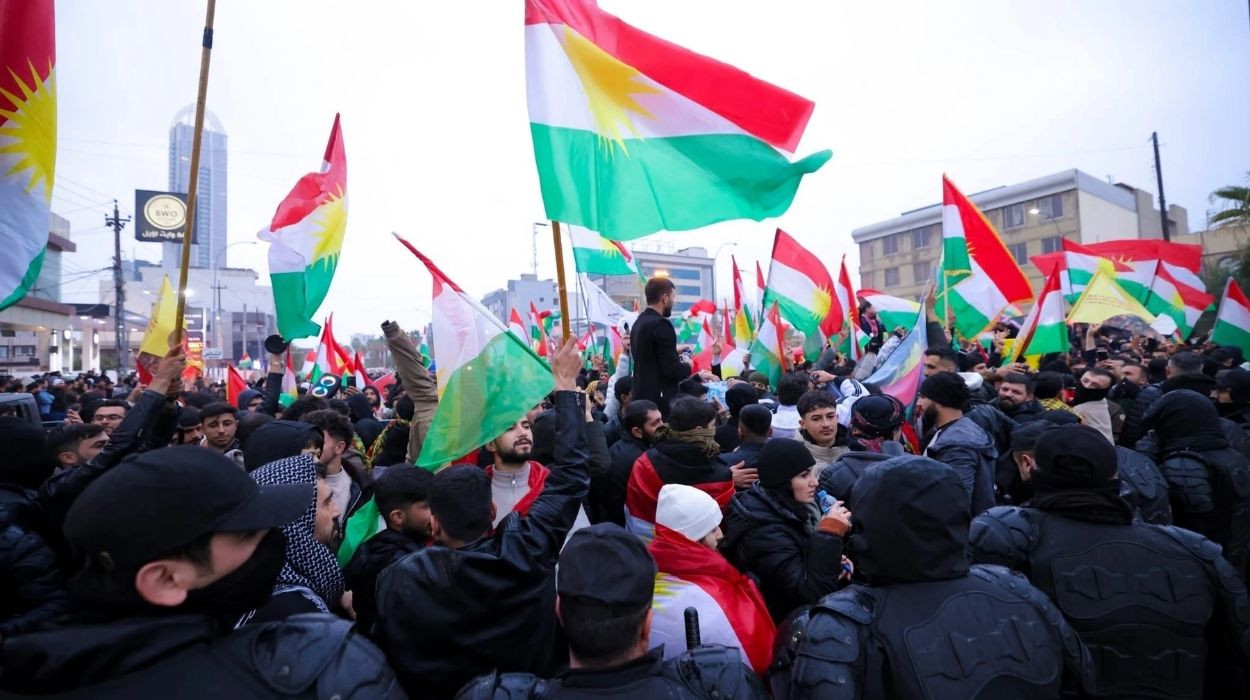
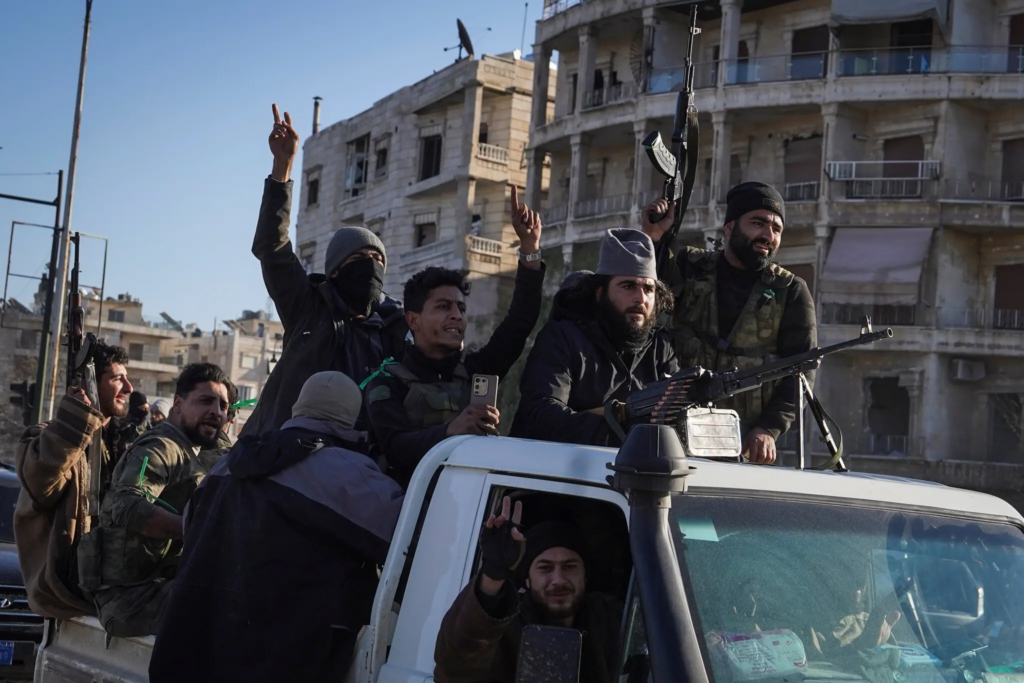
The Kurdish-led multi-ethnic project in Syria is being forcefully dismantled as thousands of mostly-Arab pro-government fighters, including hardline Islamists, have overrun the northeast. Armed with weaponry supplied by the Turkish state and with the blessing of Washington’s inaction, President Ahmed Al-Sharaa’s forces now impose the central government’s will on the majority-Kurdish northeast.
A new Syria meant to be created from pluralistic democratic confederalism is giving way to an old familiar despotism, the consequences of which will reverberate across the region for years to come if the Syrian Democratic Forces (SDF) are abandoned by their international backers.
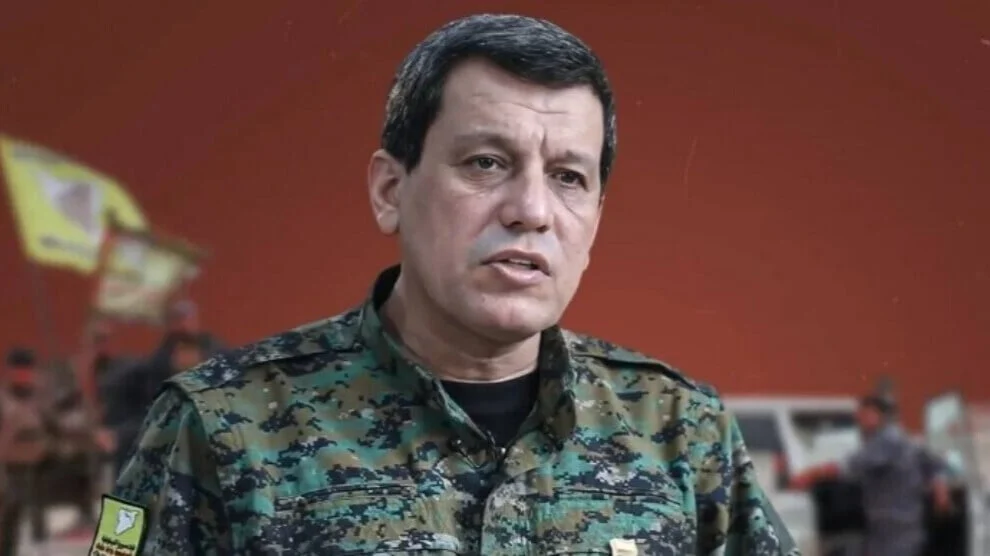
“This war was imposed on us.”
Abdi
These are the words spoken by Mazloum Abdi, Senior Commander of the SDF, on January 18, 2026, to the people of northeastern Syria. Forces from across Rojava Kurdistan (northeast Syria) are being mobilized in preparation for a total war with Damascus. Kurdish cantons from Qamishli to Kobane are getting ready for a confrontation and asking for support from all parts of Kurdistan and abroad.
This stands in stark contrast with the situation last year, when Abdi met with Al-Sharaa (also known as Abu Mohammed al-Jolani) to sign an integration deal. This political settlement aimed at formalizing a ‘brotherhood’ between the Syrian Transitional Government (STG) and the Democratic Autonomous Administration of Northeast Syria (DAANES). The deal called for a ceasefire along SDF-STG confliction lines in places like Aleppo, reaffirmed the indigeneity of the Kurds, and ensured protections to them.
A year later, those same confliction lines gave way to mass violence and destruction in longstanding majority-Kurdish neighborhoods of Shiekh Maqsood and Ashrayif–displacing tens of thousands of Kurds to neighboring Shahba region and leading to the withdrawal of SDF forces from Arab tribal areas in Raqqa and Deir Ezzor.
“We wanted to prevent this war. But unfortunately, because this war was planned by many sides, and because of insistence and pressure, it was forced upon us, until we reached today. So that it would not become an internal war.”
Abdi’s words reflect months of failed negotiations over the status of Kurds and the future of the DAANES in the new Syria. Protection of the people of northeastern Syria from mass violence was paramount for Abdi after months of distrust. Indiscriminate violence against Alawites, Druze, and Christians at the hands of Sunni extremists already showed an inability to ensure minority protections. It was for this reason that Abdi and many other minority leaders called for a decentralized federal model that would allow for protection to remain in the hands of local forces, such as the SDF.
However, for Damacus things are seen differently. President al-Sharaa insists on centralization as the future model for Syria. This means that all military units not under the command of the Syrian Defense ministry must disarm, dissolve and submit to Damascus–federalism is not an option.
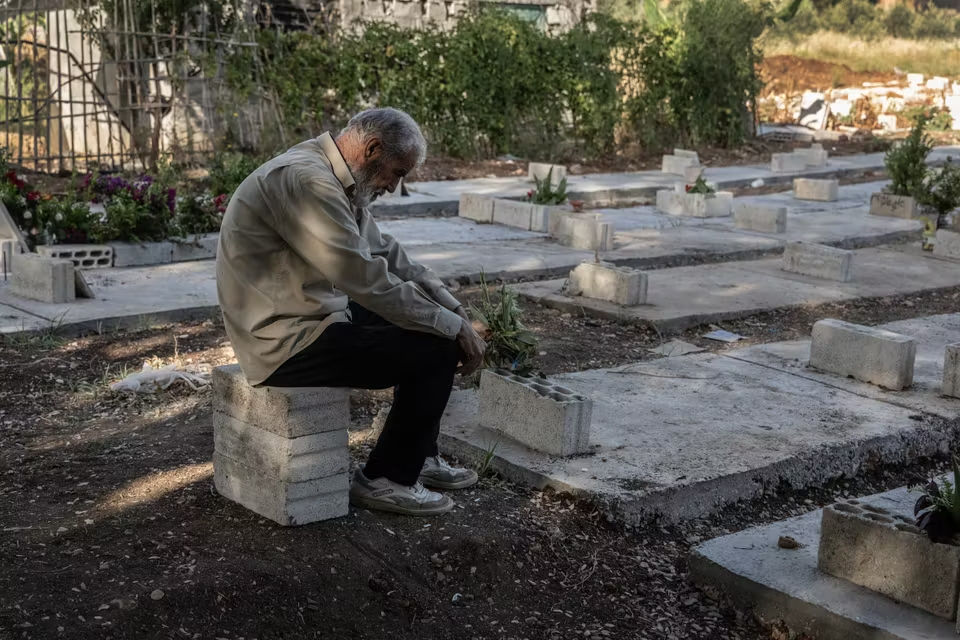
From this ethos, the violence of last year has flowed from the Alawite shores in Latakia to the Druze villages of Suweyda and Kurdish streets of Aleppo—events in northeastern Syria today are a continuation of this carnage.
Al-Sharaa insists that massacres committed by his forces against these minorities were done so by rogue elements and that the state will protect the rights of all its respective components, the reality is different. However, his denials fall flat after reporting by Reuters journalist Maggie Michaels, who in a June 20, 2025 article documented the Alawite massacres on the coast–including the connection between groups under Damascus’ control such as Jaysh al-Islam and violence against civilians.
Make no mistake, despite the government’s denial and its pronouncements, the massacres of the last year are not only state sanctioned but planned and the pattern repeats today.
The new Islamist Internationale
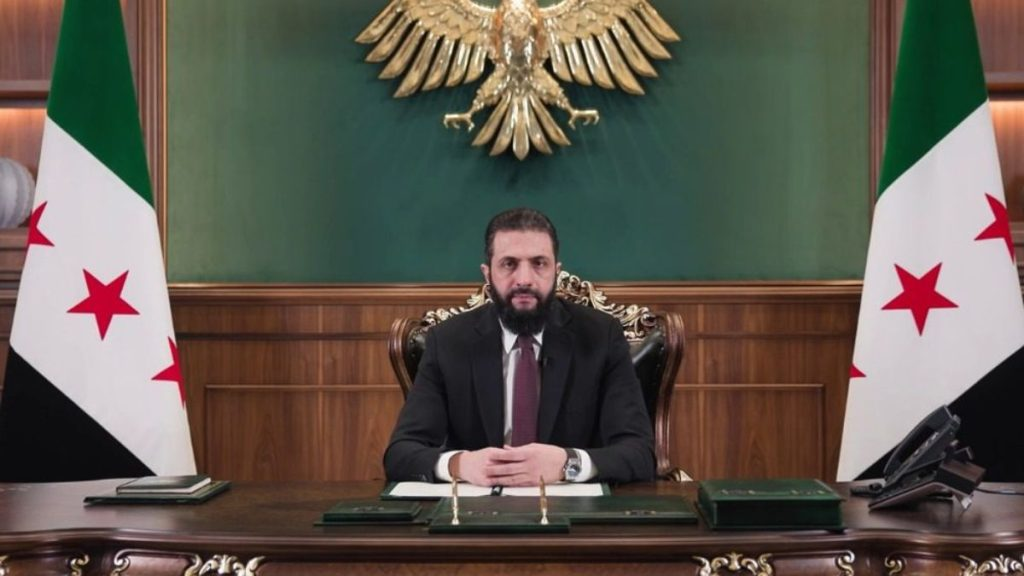
“God has raised righteousness and piety at the account of belonging. So by God, there is no favor for an Arab or Kurd or Turk, or anyone else except by the piety of God and the righteousness of man regardless of his people.”
Al-Sharaa
President Al-Sharaa made this pronouncement following the announcement of Decree no. (13) on January 16, 2026. The decree made Nowruz an official holiday and reiterated the Kurdish people as a fundamental component of the Syrian national identity. Yet, the language used to deliver this decree also reflects the nature of Damascus’ governance project.
Ahmed Al-Sharaa masks the actions of his government through religious rhetoric to provide a veneer of divine moral authority. This is no coincidence but reflective of the Islamist model that Hayat Tahrir al-Sham (HTS) governed Idlib prior to ousting Bashar al-Assad and seizing power in December, 2024. Back then, Jolani ruled the province autocratically by gradually consolidating control over disparate jihadist militias and governing as an authoritarian Islamic emirate.
Today, al-Sharaa is seeking to replicate this model for the entirety of Syria.
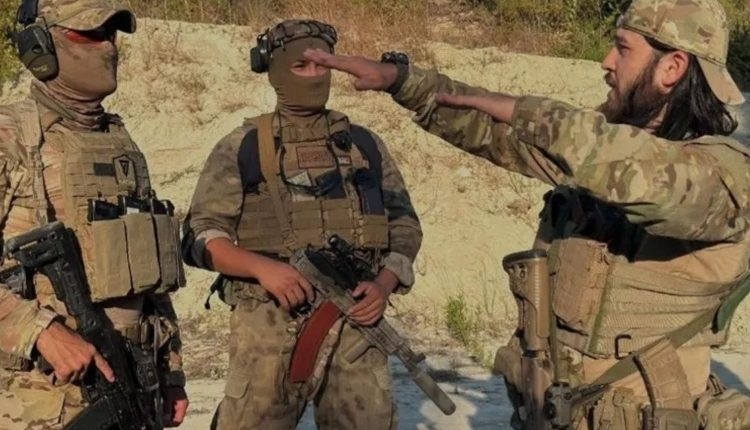
The new Syrian Army is a conglomeration of various disparate fanatical jihadist militias, a significant minority of whom come from abroad from places such as Uzbekistan. These foreign fighters and other Syrian militants that make up Al-Sharaa’s army form the new Islamist internationale that is operating under the auspices of Damascus and committing violence towards the Kurdish people.
These fighters are encouraged by a Jihadist mindset that wants to impose one uniform vision of Syria–a Sunni pan-Islamist Syria.
The Syrian Ministry of Endowments is circulating calls for prayers at mosques, celebrating “conquests and victories” against the Kurds by invoking a sura from the Anfal campaign–which was also used by Saddam Hussein as justification for his genocide against the Iraqi Kurds.
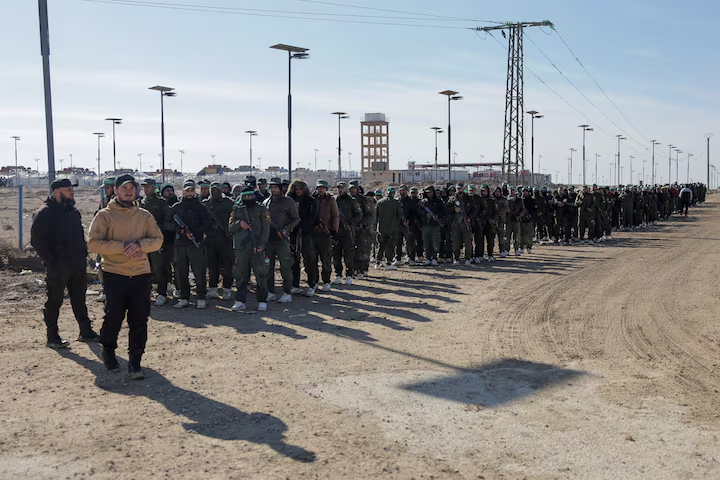
As prisons holding thousands of foreign ISIS fighters get taken over by the STG in Deir Ezzor and throughout the northeast, many will be getting taken over by the very same mindset that is imprisoned there. This situation should alarm the international community, especially the United States who has invested heavily in anti-ISIS operations and by extension Israel–who has been recalibrating its Syria policy to adjust to the post-Assad environment limit threats posed to its northern theatre by a destabilized Syria.
For the United States, a Syria that is a hub for Islamist extremism undermines hard fought victories gained in the war against ISIS. A pan-Islamist Syria will give way to regional instability as the state becomes a springboard for a new global jihadist movement.
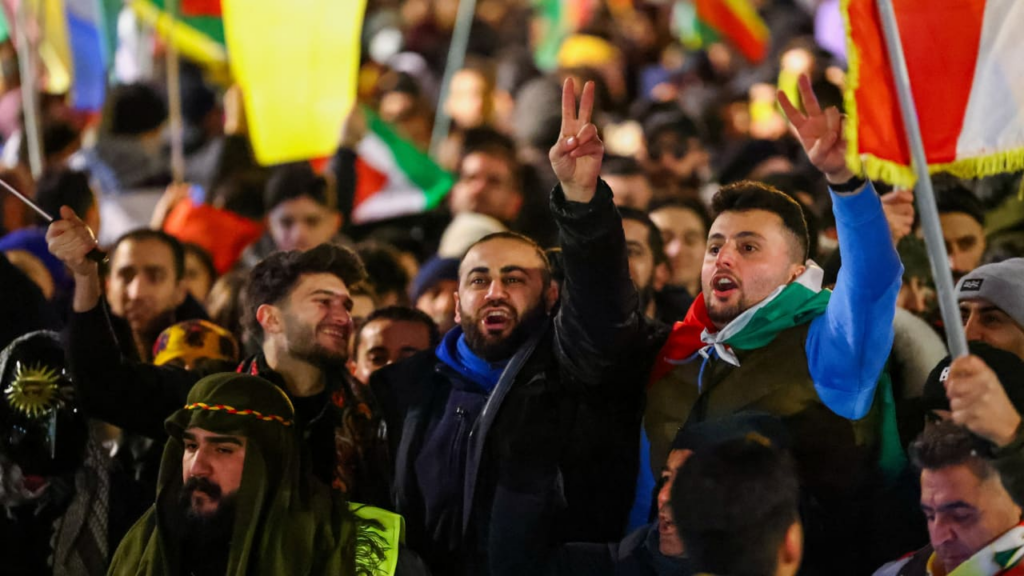
“I die with honor, but I do not sell my dignity nor that of my people,” Abdi reportedly told al-Sharaa at the end of their final meeting.
The Kurdish people are under direct attack. The world must not abandon them to die.
Written by Anthony Avice Du Buisson (01/21/2026)
![A Broken Hall of Mirrors – [Short Story]](https://philosophyismagic.com/wp-content/uploads/2020/12/11231699_879026565507141_1680011889352418125_o-700x465.jpg)
